Saturday, November 23, 2013

Obama’s War On Medical Marijuana Steps Up

from fitsnews.com


Obama’s War On Medical Marijuana Steps Up
 28 Comments


In 2008 then-U.S. Sen. Barack Obama was asked point black whether he would stop the U.S. Drug Enforcement Agency’s senseless raids on medical marijuana facilities.
“I would because I think our federal agents have better things to do, like catching criminals and preventing terrorism,” Obama said at the time.
Amen to that, right?
Unfortunately, like most of the words that escape Obama’s mouth – his promise about medical marijuana turned out to be utter and complete horse crap.
Obama hasn’t stopped medical marijuana raids – he has dramatically ramped them up. According to Reason.org, his administration is “averaging 36 medical marijuana prosecutions a year, compared to 20 a year under his predecessor.”
Not only that, Obama is deliberately targeting medical marijuana growers who are in compliance with state law – even though he vowed in 2008 “I’m not going to be using Justice Department resources to try and circumvent state laws on this issue.”
Hmmmm …
This week federal authorities launched a fresh round of raids on medical marijuana facilities in Colorado – where voters recently approved marijuana legalization laws (but where politicians are trying to tax the product to death). The raids – carried out in Boulder and Denver – hit at least ten locations.
No arrests were made (at least not yet) although tons of product was taken and significant property damage done.
Oh and according to the Associated Press the Justice Department says “ the probable-cause documents that outline the reasons for the raids are sealed.”
Great …
“We see this again and again, raids where they smash windows, take anything of value, and nine times out of 10 there’s never any charges that follow,” a Colorado pot lobbyist told the AP. “These raids were done during business hours in full daylight. Why do they bust windows when they could just walk through the door?”
Easy: A lot of these cops are adrenaline junkies who love no-knock raids … no matter the consequences.
Insanity …
Marijuana and other drugs should be legalized and taxed just like any other product, with impairment laws for public intoxication or driving under the influence enforced the same as for alcohol.
Seriously … this is getting ridiculous. Not to mention expensive (America has blown more than $1 trillion over the last four decades on its failed “War on Drugs”).

Read more at http://www.fitsnews.com/2013/11/22/obamas-war-medical-marijuana-steps/#rM20radTWP39Z4x0.99

The Agony and Utility of Ecstasy

from wnpr.org


Credit Chion Wolf / WNPR
C. Michael White is a Professor and Department Head at UConn’s School of Pharmacy.
Credit Wikimedia Commons
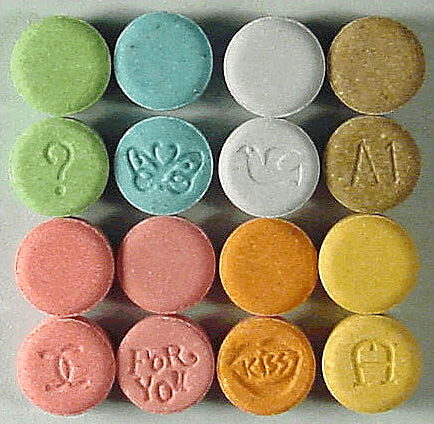
Tablets containing MDMA.
"Molly" is the nickname for MDMA, or Ecstasy, and it's short for "Molecule", meaning you're getting the "real thing", chemically speaking. Except you almost never do. On this show, we'll talk about the dangers of Molly, the medical uses of MDMA, and the curious romance between the drug and the form of music known as EDM, Electronic Dance Music.
GUESTS:
  • C. Michael White  is a Professor and Department Head at UConn’s School of Pharmacy
  • Dr. John Halpern is an Assistant Professor of Psychiatry at Harvard Medical School
  • Brad Burge is the Director of Comm. with the Multidisciplinary Association for Psychedelic Studies (MAPS)
  • Sam Tracy is the Chairman of the Board for Students for Sensible Drug Policy in Washington, DC
  • Tommie Sunshine is a music producer, journalist and DJ

Thursday, November 21, 2013

Poll: 82 percent favor medical marijuana, plurality support pot legalization

from miamihearald


This photo taken Feb. 13, 2013 shows different strains of marijuana displayed during the grand opening of the Seattle location of the Northwest Cannabis Market, for sales of medical marijuana products. It took nearly 15 years after voters approved it for medical marijuana to become available in the District of Columbia, but the next major change to the district’s pot laws is on the fast track. The D.C. Council is poised to approve a bill to decriminalize possession of small amounts of pot, and Democratic Mayor Vincent Gray supports it. He could sign the bill into law as early as January.
This photo taken Feb. 13, 2013 shows different strains of marijuana displayed during the grand opening of the Seattle location of the Northwest Cannabis Market, for sales of medical marijuana products. It took nearly 15 years after voters approved it for medical marijuana to become available in the District of Columbia, but the next major change to the district’s pot laws is on the fast track. The D.C. Council is poised to approve a bill to decriminalize possession of small amounts of pot, and Democratic Mayor Vincent Gray supports it. He could sign the bill into law as early as January. 
ELAINE THOMPSON / AP

MCAPUTO@MIAMIHERALD.COM


If a medical marijuana initiative makes Florida's ballot next year, it could pass with an astonishing 82 percent of the vote, according to a new Quinnipiac University poll released Thursday that finds voters also favor outright legalization as well.
Support for the proposed constitutional amendment is strong among voters of every political stripe, age and income level, with independents lending the most support: 88 percent, the poll shows.
The overall 82-16 percent support for medical marijuana is the biggest to date. The previous high-point for Florida approval was about 70 percent in a poll taken earlier this year by the medical-marijuana advocacy group, People United for Medical Marijuana.
There are some differences in wording between the initiative and the Quinnipiac poll; the amendment says doctors can "recommend" marijuana, the poll asks if a doctor should be able to "prescribe" it.
Still, medical marijuana is clearly popular. And marijuana legalization is becoming more-liked as well, albeit narrowly.
Nearly half of Florida voters favor it — 48 percent — while 46 percent oppose pot legalization for personal use. That's within the margin of error, but it's a leading indicator of a shift in public opinion. Support for legalization is again strongest among independents (57-37 percent), and then Democrats (55-39 percent).
But Republicans are opposed 30-64 percent. Contrast that with GOP voter support for medical marijuana is solid: 70-26 percent.
One early poll and analysis from People United found that medical-marijuana was so popular that it could alter the course of the governor's race.
Republican Gov. Rick Scott opposes medical marijuana; Democrats Charlie Crist and Nan Rich support the initiative, which is funded and led by Crist's employer, trial attorney John Morgan, a Democratic donor. A major Florida Republican donor, former ambassador Mel Sembler, is opposing the measure through his Drug Free America Foundation.
In the race for governor, the Quinnipiac poll found Scott trailed Crist poll by 7 percentage points, 40-47 percent. That's an improvement for Scott, however, compared to the last Quinnipiac Poll in June, when the governor trailed by 10 percentage points.
As for medical marijuana's fate, the proposed amendment — which takes 60 percent voter approval to pass in Florida — appears to be on an easy path to victory at the moment. But only if it makes the ballot.
The Florida legislative leaders and the state's Attorney General want the state Supreme Court to block the measure from the ballot, saying the ballot summary is misleading and that it violates a rule that limits the scope of a constitutional amendment to a single subject. People United for Medical Marijuana, the advocacy group pushing the measure, say the criticisms are false.
The Florida Supreme Court will hear the matter next month.
Even if it passes constitutional muster, People United needs to collect 683,149 verified voter signatures by February. People United has gathered 200,000 so far, of which more than 110,000 had been verified last month.
In November, Miami Beach voters approved a non-binding straw poll calling for medical marijuana by 64 percent.

Friday, November 15, 2013

Leading Magazines From the Right and Left Come Together on Marijuana Legalization

from policymic

Chris Soda


One area of policy which appears to have transmuted the pronounced polarization in this country has been marijuana.
It was a year ago that the people of Colorado and Washington united to vote to legalize marijuana for recreational use, answering the question of 'if' in historic fashion.
The unified spirit surrounding marijuana legalization continues to mount. The release of the November issues of right-leaning Reason magazine and left-leaning The Nation magazine, feature pot legalization and the ending of prohibition. In a country that is so divided on almost everything else, this unified spirit gracing marijuana legalization appears to be shaping up to be a harmonious sanctuary in an ocean of polarization.
Because of all the areas and issues that prohibition negatively impacts there is an issue for everyone to grab onto.
In Reason's "Pot Goes Legit," Jacob Sullum quotes former Colorado Congressman Tom Tancredo: "I am endorsing Amendment 64 not despite my conservative beliefs, but because of them."
I was surprised myself recently when my very conservative cousin, who doesn't share my worldview on much of anything, told me he was right there with me with ending the war on drugs. Thinking on that, I realized how much there is for conservatives to latch onto with legalization. It lends a blow to big government, thereby affirming state sovereignty, and it also adds to the free market. "The initiative will succeed," says Sullum, "to the extent that it transforms a countercultural symbol into a capitalist commodity."
The Nation's "Marijuana Wars" include multiple stories that touch on issues across marijuana culture. High Times has a great profile in there. Racial justice is talked about by Dr. Carl Hart, and the solution to racist marijuana possession arrests is evaluated by sociologist Harry Levine. In "The Drug War Touched My Life: Why I'm Fighting Back," one will hear personal stories from a variety of people such as retired Baltimore police officer, Neil Franklin, and activist's such as Amir Varick who spent almost twenty years in jail for a drug crime he didn't commit. These are powerful experiences from people who are coming at this issue from the other side of the spectrum, where it's more a question of freedom and liberty, racial equality, and human rights. For a list of all the stories, seeMarijuana Wars.
Whether marijuana intersects with someone getting stopped and frisked because of their color, or being harmed from adulterated drugs, or suffering a traumatic childhood because of a parent incarcerated, or if one simply believes in the freedom of choice of what one puts in his own body, this issue touches the lives of all.
In the largest sense, we're all united on this issue because we all do drugs, whether legal or not, and even if you completely abstain from everything, we all know individuals that do and we care about those people.
Fifty-eight percent of Americans now support marijuana legalization, according to the most recent Gallup poll and as these above magazines illustrate, people continue to rally around pot. The descent of the government edifice that marijuana has no redeeming qualities is well underway. Still, this is only the beginning and the widespread cooperation we are seeing with people from all walks of life and affiliations makes one wonder what can be accomplished in the years to come.
Chris Soda is an intern with the Drug Policy Alliance (www.drugpolicy.org)
This piece first appeared on the Drug Policy Alliance Blog http://www.drugpolicy.org/blog/right-and-left-come-together-marijuana-legalization

Saturday, November 9, 2013

Marijuana Legalization Wins Big in Elections, Is Federal Decriminalization Next?

from truth-out.org


Friday, 08 November 2013 11:38By Jessica DesvarieuxThe Real News Network | Video Interview
TRANSCRIPT:
JESSICA DESVARIEUX, TRNN PRODUCER: Welcome to The Real News Network. I'm Jessica Desvarieux in Baltimore.
On November 5, voters in four U.S. cities decided to legalize recreational marijuana use. In the Michigan cities of Lansing, Jackson, and Ferndale, it will now be legal for anyone 21 years or older to possess up to one ounce of marijuana on private property. In Portland, Maine, it will be legal to possess up to 2.5 ounces. And, of course, in the Centennial State of Colorado, where recreational marijuana use has been legal for a year now, they voted in a new measure that levies a 15 percent excise tax tax and a 10 percent sales tax on the product. With these cities amending their marijuana laws following the lead of Colorado and Washington State, one has to wonder which U.S. cities and states will follow. And what does this mean for the future of the so-called war on drugs?
Joining us now to discuss the recent marijuana legalization and taxation votes and the ramifications of all of this is Morgan Fox. He's the communications manager at the Marijuana Policy Project, which is an advocacy group that works towards national legalization of marijuana.
And joining us in-studio is Neill Franklin. He is the executive director of Law Enforcement Against Prohibition, also known as LEAP.
Thanks so much for joining us, Neill.
NEILL FRANKLIN, EXECUTIVE DIRECTOR, LEAP: Thanks for having me, Jessica.
DESVARIEUX: And, Morgan, of course, thank you for joining us as well.
Let's get right into it, Morgan, and start off with you. Are these recent results a surprise in any way, considering the Maine Legislature had passed a measure in 2009 making possession of up to 2.5 ounces of marijuana a civil penalty punishable by only a civil fine. What makes the election results in Portland so significant?
MORGAN FOX, COMMUNICATIONS MANAGER, MARIJUANA POLICY PROJECT: Well, I think that they're indicative of a national trend in thinking that is starting to say that marijuana prohibition is an utter failure. People are finally starting to realize this. And as of just last month, 58 percent of the American public feel that marijuana should be taxed and regulated similarly to alcohol. These measures are just an indication that that is really a truism across the country.
DESVARIEUX: Okay. Let's get to you, Neill. Let's talk a little bit about the ACLU report that recently came out. It found that in 2010 there was one marijuana arrest every 37 seconds, and states spent a combined over $3.6 billion enforcing marijuana possession laws. Will there be any savings to taxpayers in the cities where they have voted to legalize marijuana from cutting back policing and prison costs, things like that?
FRANKLIN: Well, there should be. It depends on how that city manages this new policy. But it's definitely going to be a savings for law enforcement. They'll be able to redirect their limited to resources to crimes of violence, which is a benefit for the citizens, obviously. So they'll be up to focus on murder, rape, robbery, domestic violence. And I'll tell you, from my experience, just about every city can use more attention in those areas. Over the past few decades, we've actually been solving less violent crime across the country than what we have in the past. You'd think that would be better with--you know, you'd think we would do better with more technology today. So this will free up a ton of resources for law enforcement to re-focus their priorities. Yeah.
DESVARIEUX: And, Morgan, I wanted to ask you about estimates of how much new revenue actually this will bring to the state of Colorado.
FOX: Well, that has yet to be determined. It really depends on exactly what the market begins to bear and whether or not these businesses are able to effectively implement their business plans, as well as to stick with the laws that are set forth by Colorado and the criteria that has been laid out by the Department of Justice. But it looks to be in the tens of millions of dollars throughout the state.
You know, estimates of this industry nationwide are at something around $30 billion, but that varies from estimates to estimate. But this is a huge industry. And right now we're letting it be controlled by violent criminals instead of legitimate businesses. Colorado and Washington have taken the first steps towards changing that. And I think that these cities that just passed laws, while not regulating the marijuana industry or controlling supply, have indicated that they are headed in that direction. So we're going to start seeing more and more cities and states start to take control of their marijuana markets, as opposed to enforcing these laws against nonviolent marijuana users and enriching criminal gangs.
DESVARIEUX: We can't talk about legalizing marijuana without getting the other side of this issue. We actually had a former drug policy adviser to three U.S. administrations, Kevin Sabet, on The Real News, and we got into a debate about the topic. He opposed legalization and said that those with small possession, small amounts of marijuana are not actually being targeted. Let's take a listen to what he had to say.
~~~
KEVIN SABET, FMR. SENIOR DRUG POLICY ADVISER IN THE OBAMA ADMIN.: Well, drug incarceration rates actually have fallen in the last couple of years. And, in fact, the growth in prison rate over the last ten to 15 years has not been mainly from drugs. It's been actually from other--there was the growth in the '80s, and since then it has gone down, from drug crimes specifically.
~~~
DESVARIEUX: So, Neill, what's your response to this?
FRANKLIN: People do go to jail for small amounts of marijuana. And I can attest to that. We are arresting people today in Baltimore City for half a joint, for a roach. Whatever police officers find on someone, on their person or in their car, they are making the arrest.
Now, maybe Kevin is talking about we don't have people doing long periods of time behind bars being convicted for the possession of marijuana. The mere arrest alone will prevent you from getting a job in the future because of technology today. Every arrest goes into cyberspace. Every arrest is therefore discoverable. Any employer who is going through applications to hire people, they have someone like me, a private investigator, do a background check, I find the arrest, and they put that person's application aside and move on to the next group of people.
Not only that, when someone is arrested, they go to a detention center. Here in Baltimore, you're probably going to spend a couple of days in the detention center before you can either make bail or before you get released on your personal recognizance. And very seldom do they release people on their personal recognizance. At the end of the day, spending a day, a few hours, a couple of days in jail, you can lose a job because you can't report to work, you can lose your car, you can lose a lot of things. So I beg to differ with Mr. Sabet on that one.
DESVARIEUX: What do you say to people that say that essentially this is going to make it too easy for underaged people, youth, really, to get their hands on marijuana?
FOX: We have it reversed. Our current policies make it easier for our young people to get marijuana. Drug dealers today hire children to sell marijuana to other children. And they sell it in our schools. They don't ask for ID. It's not behind a counter. I don't know if one liquor story--and the reason I say liquor stores is because that's where states like Colorado and Washington state are moving to. For instance, Washington State, their liquor control Board is setting the policy. I don't know of one liquor store that hires children to sell booze to other children. We have people selling marijuana on just about every corner in Baltimore. It is our current policies and that current condition and environment that puts more drugs into the hands of our young people.
DESVARIEUX: Okay. Morgan, I wanted to ask you a question about the future of all of this. You know more and more Americans are actually in support of legalizing marijuana. There's a recent Gallup poll that shows 58 percent of Americans support making marijuana legal. I want to get a sense of is there any upcoming elections or measures where legalization will be on the ballot? And where do you see the next changes coming from state or city wise?
FRANKLIN: Well, Washington, D.C., is actually considering a measure to remove criminal penalties for small amounts of marijuana, which is very timely, considering that it was recently revealed that that city has one of the highest rates of racial disparity in marijuana arrests of anywhere in the country that is disenfranchising an entire section of the population during a time of great economic growth.
But I think that we're going to see a lot of, you know, cities following Portland and Ferndale and these other cities in Michigan over the next year. But we're certainly going to see several ballot initiatives at the state level, definitely in Alaska, where MPP will be working with local advocates, and in California and Oregon as well. And then in 2016 there's absolutely no doubt in my mind that we're going to see five or six more states make marijuana illegal legal within their states, at which point Congress will definitely have to address the issue, simply because of the number of states that are out of line with federal law.
DESVARIEUX: Neill, do you really think we'll get Congress to address the issue anytime soon?
FRANKLIN: I think so. I think they have to. I don't think they're going to have a choice in this matter. This is--you know, I compare this to the end of alcohol prohibition in 1933. It wasn't the federal government that moved to an prohibition. It was the states, the individual states. And right here in this wonderful state of Maryland in which I live, they never supported alcohol prohibition. So it's the states that are moving the new marijuana policy, ending prohibition for marijuana. It's going to move across the country. And then the federal government's going to have to respond. And that's the plan. That's the key. Let's not give them the choice. Let's not give them an option. Let's force them to do it.
DESVARIEUX: Well, we'll certainly be tracking this story on The Real News. Neill, thank you so much for joining us in-studio.
FRANKLIN: Thanks, Jessica.
DESVARIEUX: And, Morgan, thank you very much for joining us as well.
FOX: Thank you for having me.
DESVARIEUX: And thank you for joining The Real News Network.

Friday, November 1, 2013

For First Time, Americans Favor Legalizing Marijuana

from gallup.com


October 22, 2013


Support surged 10 percentage points in past year, to 58%

by Art Swift
WASHINGTON, D.C. -- For marijuana advocates, the last 12 months have been a period of unprecedented success as Washington and Colorado became the first states to legalize recreational use of marijuana. And now for the first time, a clear majority of Americans (58%) say the drug should be legalized. This is in sharp contrast to the time Gallup first asked the question in 1969, when only 12% favored legalization.
Americans' Views on Legalizing Marijuana
Public support for legalization more than doubled in the 1970s, growing to 28%. It then plateaued during the 1980s and 1990s before inching steadily higher since 2000, reaching 50% in 2011.
A sizable percentage of Americans (38%) this year admitted to having tried the drug, which may be a contributing factor to greater acceptance.
Success at the ballot box in the past year in Colorado and Washington may have increased Americans' tolerance for marijuana legalization. Support for legalization has jumped 10 percentage points since last November and the legal momentum shows no sign of abating. Last week, California's second-highest elected official, Lt. Gov. Gavin Newsom, said that pot should be legal in the Golden State, and advocates of legalization are poised to introduce a statewide referendum in 2014 to legalize the drug.
The Obama administration has also been flexible on the matter. Despite maintaining the government's firm opposition to legalizing marijuana under federal law, in late August Deputy Attorney General James Cole announced the Justice Department would not challenge the legality of Colorado's and Washington's successful referendums, provided that those states maintain strict rules regarding the drug's sale and distribution.
The movement to legalize marijuana mirrors the relatively recent success of the movement to legalize gay marriage, which voters have also approved now in 14 states. Public support for gay marriage, which Americans also overwhelmingly opposed in the past, has increased dramatically, reaching majority support in the last two years.
Independents Fueling Growth in Acceptance of Legalizing Marijuana
Independents' growing support for legalization has mostly driven the jump in Americans' overall support. Sixty-two percent of independents now favor legalization, up 12 points from November 2012. Support for legalization among Democrats and Republicans saw little change. Yet there is a marked divide between Republicans, who still oppose legalizing marijuana, and Democrats and independents.
Trend: Percentage of Americans Who Support Legalizing Marijuana, by Party Identification
Young Adults More Likely to Support Legalization
Americans 65 and older are the only age group that still opposes legalizing marijuana. Still, support among this group has jumped 14 percentage points since 2011.
In contrast, 67% of Americans aged 18 to 29 back legalization. Clear majorities of Americans aged 30 to 64 also favor legalization.
Americans’ Views on Legalizing Marijuana, by Age
Bottom Line
It has been a long path toward majority acceptance of marijuana over the past 44 years, but Americans' support for legalization accelerated as the new millennium began. This acceptance of a substance that most people might have considered forbidden in the late 1960s and 1970s may be attributed to changing social mores and growing social acceptance. The increasing prevalence of medical marijuana as a socially acceptable way to alleviate symptoms of diseases such as arthritis, and as a way to mitigate side effects of chemotherapy, may have also contributed to Americans' growing support.
Whatever the reasons for Americans' greater acceptance of marijuana, it is likely that this momentum will spur further legalization efforts across the United States. Advocates of legalizing marijuana say taxing and regulating the drug could be financially beneficial to states and municipalities nationwide. But detractors such as law enforcement and substance abuse professionals have cited health risks including an increased heart rate, and respiratory and memory problems.
With Americans' support for legalization quadrupling since 1969, and localities on the East Coast such as Portland, Maine, considering a symbolic referendum to legalize marijuana, it is clear that interest in this drug and these issues will remain elevated in the foreseeable future.


Survey Methods
Results for this Gallup poll are based on telephone interviews conducted Oct. 3-6, 2013, on the Gallup Daily tracking survey, with a random sample of 1,028 adults, aged 18 and older, living in all 50 U.S. states and the District of Columbia.

For results based on the total sample of national adults, one can say with 95% confidence that the margin of sampling error is ±4 percentage points.
Interviews are conducted with respondents on landline telephones and cellular phones, with interviews conducted in Spanish for respondents who are primarily Spanish-speaking. Each sample of national adults includes a minimum quota of 50% cellphone respondents and 50% landline respondents, with additional minimum quotas by region. Landline and cell telephone numbers are selected using random-digit-dial methods. Landline respondents are chosen at random within each household on the basis of which member had the most recent birthday.
Samples are weighted to correct for unequal selection probability, nonresponse, and double coverage of landline and cell users in the two sampling frames. They are also weighted to match the national demographics of gender, age, race, Hispanic ethnicity, education, region, population density, and phone status (cellphone only/landline only/both, and cellphone mostly). Demographic weighting targets are based on the March 2012 Current Population Survey figures for the aged 18 and older U.S. population. Phone status targets are based on the July-December 2011 National Health Interview Survey. Population density targets are based on the 2010 census. All reported margins of sampling error include the computed design effects for weighting.
In addition to sampling error, question wording and practical difficulties in conducting surveys can introduce error or bias into the findings of public opinion polls.
For more details on Gallup's polling methodology, visit www.gallup.com.
Click below to get more stories, RSS feeds, and e-mail alerts on these topics:
Sign up for Gallup e-mail alerts or RSS feeds
Get Gallup news on Facebook and Twitter