Thursday, February 20, 2014

States combat alarming drug overdose deaths

from usatoday

Michael Ollove, Pew/Stateline Staff Writer9:56 a.m. EST February 20, 2014


17 states and D.C. have passed "Good Samaritan" laws that grant limited immunity to drug users who seek help for someone who has overdosed
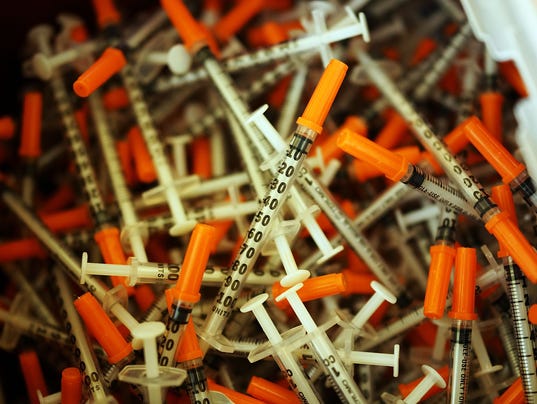

GTY 467450445


When Stephen Cardiges slipped into unconsciousness from a heroin overdose in the back of a Honda Civic two years ago, his two companions just kept driving around suburban Atlanta, hoping Stephen would come to on his own.
They didn't want to call 911 or the police, for fear of inviting their own arrests for drug use. But Cardiges, an Eagle Scout who planned to join the U.S. Navy after he turned 21 the following week, never regained consciousness. His brief life ended in the backseat of the Honda that Sunday summer evening, barely two miles from the nearest hospital.
Stephen Cardiges was another casualty in what can only be called an epidemic. According to the most recent data from the Centers for Disease Control and Prevention, there were 38,329 overdose deaths in the U.S. in 2010. Overdoses are the No. 1 accidental killer of Americans 25 to 64 years old, surpassing even traffic deaths.
Now states are taking action to prevent some of those deaths, many of which are attributable to heroin and the illegal use of prescription pain medications.
Seventeen states and the District of Columbia have passed "Good Samaritan" laws that grant limited immunity to drug users who seek help for someone who has overdosed, according to the Trust for America's Health (TFAH), a nonpartisan research and advocacy group based in Washington, D.C. The same number have expanded access to the medication naloxone (also known by its brand name Narcan), which can quickly reverse the effects of opioid overdoses and restore breathing to a stricken person.
Similar measures are under consideration in at least six other states (Maine, Michigan, New York, Ohio, Pennsylvania and Virginia).
In some states, such as Oklahoma and North Carolina, the measures are passing with the support of conservative Republican lawmakers allied with police and the families of overdose victims. They also carry the endorsement of the American Medical Association, the National Association of Drug Diversion Investigators, the U.S. Conference of Mayors and the American Public Health Association.
Not everyone is on board, however. Maine Gov. Paul LePage, a Republican, is opposing a naloxone access bill that is under consideration in his state's legislature, arguing that the availability of an antidote would only encourage more drug use. And last year, LePage vetoed a Good Samaritan bill.
"ALMOST A MIRACLE DRUG"
Though the Good Samaritan laws vary slightly from state to state, their basic intent is the same: Anyone who calls for help in the case of an overdose can't be prosecuted for possession of small amounts of drugs or drug paraphernalia. However, the laws do not grant immunity for other crimes, such as drug trafficking.
The naloxone laws also vary somewhat, but the common goal is to make the medication more widely available. Naloxone is available only by prescription, but states have loosened the normal restrictions on such drugs to allow providers to prescribe naloxone to third parties, such as family members or friends of drug users. Some of the new naloxone laws allow community-based organizations and clinics to dispense it to anyone in need. The laws remove liability for prescribers and for non-medical providers who dispense it.
Naloxone may be injected into a vein or a muscle. It also can be sprayed into the nose via a special nasal adaptor. It is an especially easy drug for a lay person to administer, and more paramedics and police officers have begun carrying it with them. In the words of Corey Davis, a staff attorney with the Network for Public Health Law who has written about the need to improve access to naloxone, "It is almost a miracle drug." Davis believes it should be sold over the counter to maximize access.
POLICE SUPPORT IS KEY
In North Carolina, where Republicans control the governor's office and the legislature, GOP lawmakers were at the forefront of successful drives to pass Good Samaritan and naloxone legislation last year.
"I would like to do anything that cuts down on the number of overdoses from these drugs," said state Sen. Austin M. Allran, the Republican who sponsored both bills after he was approached by Robert Childs, executive director of the North Carolina Harm Reduction Coalition (NCHRC).
Since the law went into effect in April, Childs said, NCHRC has documented the reversal of 45 overdoses thanks to the use of naloxone. His group has also dispensed more than 700 reversal kits in the last five months.
The campaign that Childs organized included testimony and media interviews with people who had lost children or siblings to drug overdoses. The thrust of the outpouring was that young people struggling with drug use, pain management or experimenting with illegal or prescription drugs shouldn't have to pay the ultimate price.
"I don't want people not calling 911," said Childs. "I want to lift the barrier to people doing the right thing."
North Carolina police had no trouble buying into that ethos. "The thinking in the way the bill was drafted is that it didn't encourage criminal activity but it did encourage the saving of people's lives," said Eddie Caldwell, executive vice president and general counsel of the North Carolina Sheriffs' Association, which lent crucial support to the measure.
In Georgia, an effort is underway to mimic the success in North Carolina, including enlisting the sponsorship of Republican legislators and rallying sheriffs to the cause.
Robin Elliott of Atlanta, whose only child, 21-year-old Zack, died of a heroin overdose in 2011, said that one friendly aide in a congressman's office advised her that getting the sheriffs involved in the Georgia effort would be a giant step toward success. "He said sheriffs were the most loved elected officials in most Georgia counties," Elliott said. "He said, 'If you get them on board, you're going to win.'"
OTHER STRATEGIES
States also are pursuing other strategies to combat the abuse of painkillers and heroin. In October, the Trust for America's Health listed 10 measures that states could take to combat prescription drug abuse. Good Samaritan laws and expanding access to naloxone were two of the measures TFAH listed. Other provisions include the mandatory use of prescription drug monitoring programs and the requirement that doctors examine patients before prescribing medications.
Only two states, New Mexico and Vermont (where Gov. Peter Shumlin, a Democrat, last month devoted his entire State of the State address to the "crisis" of illegal opiate use in his state), have adopted all 10 of the TFAH recommendations.
In an interview with Stateline, Robin Cardiges said she believes her son Stephen might have been saved if Georgia had had a naloxone law on the books two years ago. She's even surer that with a Good Samaritan law, Stephen's companions might have been willing to take him to a hospital for treatment. Instead he died, and they were charged with drug possession.
"I think that no one among us hasn't or won't make a deeply regrettable choice," she said. "It shouldn't cost you your life."
OVERDOSE DEATH RATES
These states had the highest rates of overdose deaths (per 100,000 people) in 2010, according to the National Center for Health Statistics, WONDER Online Database, 2010.
1. West Virginia (28.9)
2. New Mexico (23.8)
3. Kentucky (23.6)
4. Nevada (20.7)
5. Oklahoma (19.4)
6. Arizona (17.5)
7. Missouri (17)
8. (tie) Tennessee and Utah (16.9)
10. Delaware (16.6)
    Stateline is a nonpartisan, nonprofit news service of the Pew Charitable Trusts that provides daily reporting and analysis on trends in state policy.





    Tuesday, February 18, 2014

    Poll: Support grows to legalize medical, recreational marijuana in New York

    from nydailynews


    According to the poll, 89% of New York state denizens support making medical marijuana legal, and 57% favor legalizing recreational pot.


    OCT. 23, 2013 FILE PHOTO

    BRENNAN LINSLEY/AP

    This image from a marijuana dispensary in Denver could become the norm in New York State, if the state's voters have their way. A Quinnipiac poll released Monday found growing acceptance of marijuana use in New York.


    New Yorkers — especially young men — are high on the idea of legalizing marijuana.
    State voters favor legalization of medical marijuana by a huge margin — 88% to 9%, according to a Quinnipiac poll released Monday.
    Voters also favor legalizing small amounts of marijuana for recreational use by a solid margin of 57% to 39%, the same poll found.


    A Third Perspective: It’s time to legalize marijuana in New Hampshire

    from tnhonline

    By Ethan Gauvin
    TNH Columnist
    Published: Friday, February 14, 2014
    Updated: Friday, February 14, 2014 00:0

    On Jan. 1, 2014, thousands of Coloradans eagerly lined up to make their first legal purchase of recreational marijuana. Amendment 64, a ballot measure that passed in 2012 with 55 percent of Colorado voters in favor, legalized the recreational use of marijuana and permits adults aged 21 years or older to purchase up to an ounce of it. The law also places the onus of regulating the manufacture, distribution and sale of marijuana on the state government. This unprecedented experiment in governmental regulation of weed is still in its infancy, but all signs are indicating that what’s good for pot enthusiasts is good for government—and more than likely good for society.
    In the first week of the law’s implementation, Colorado marijuana dispensaries witnessed staggering sales. The 37 dispensaries that were able to meet the state’s requirements by Jan. 1 made a total of $1 million on the first day and roughly $5 million over the course of the week. Regulators have projected an eye-popping $600 million in marijuana sales for Colorado dispensaries in 2014, $70 million of which the state expects to receive in tax revenue.
    A provision in the Colorado ballot measure ensures that the first $40 million collected in taxes will be spent directly on the state’s public education system while the remainder will be used regulate marijuana distribution, refocus drug enforcement efforts and revitalize flagging drug awareness programs.
    That millions of dollars are now being poured (legally) into Colorado’s economy and public schools is well known, but where this money is no longer going deserves greater attention. Illicit drug dealers, suppliers and gangs within and outside of Colorado will see their sales plummet by hundreds of millions of dollars in 2014.
    Selling weed is the lifeblood of the vast majority of gangs in America; Colorado’s decision to cut off illegitimate cash flows will have a beneficial social impact across the country. Gangs will have less money to spend on weapons and, more poignantly, less to offer potential recruits: teenagers at the bottom of the socioeconomic ladder who join on the promise of making easy cash.
    Consequently, authorities will no longer need to arrest, prosecute and incarcerate as many gang members as they do today, which will save precious resources and preserve a felony-free future for countless young Americans. Extrapolating even further, fewer funds will reach the insidious cartels in Central and South America, and this will eventually cripple their ability to wage violent wars over supply routes to the U.S. and sap their motivation for doing so.
    Colorado is to be the first of many states (Washington is next) that will soon enjoy the profound economic and social benefits that come with legal marijuana. New Hampshire has taken note; the House of Representatives passed a marijuana legalization bill in January that was modeled on the Colorado legislation. However, the bill is unlikely to make it through the state senate and, if by some miracle it passes, Governor Maggie Hassan has publicly expressed her intention to veto the law.
    This raises the question: why? Weed is no more stigmatized in New Hampshire than in Colorado or Washington (in fact some studies have indicated that New Hampshire has greater per capita use of marijuana than Colorado), and New Hampshire could certainly benefit from additional tax revenue.
    Opponents of marijuana legalization have long argued that the drug (dare I say plant) creates a dependency in the user, and that pot is the proverbial “gateway drug.” This argument, more appropriately titled a myth, has never been grounded in science and is simply not tenable. Proponents of this belief point to the fact that marijuana users are statistically more likely to have tried cocaine than non-marijuana users, but this is entirely misleading. The Institute of Medicine of the National Academy of Sciences has publicly stated: “Because it is the most widely used illicit drug, marijuana is predictably the first illicit drug most people encounter. Not surprisingly, most users of other illicit drugs have used marijuana first. … There is no conclusive evidence that the drug effects of marijuana are causally linked to the subsequent abuse of other illicit drugs.”
    Governor Hassan should evaluate the science, or lack thereof, behind the claims of marijuana prohibitionists. If any semblance of a gateway effect exists, it arises out of marijuana’s illegality, which forces casual smokers to purchase from dealers that in many cases have access to harder drugs. To place marijuana in the same realm as cocaine, heroine and methamphetamine is ridiculous; it’s time to end this myopic strategy. New Hampshire has every reason—economic, social and otherwise—to join Colorado and embrace the growing national trend. Just as with alcohol, we will look back with head-scratching bemusement and wonder why governments outlawed marijuana in the first place.

    Sunday, February 16, 2014

    Jose Mujica To United States: Legalize Weed

    from huffpost


    The Huffington Post

    Posted: Updated: 
    Print Article
    Main Entry Image
    The The 


    The president of Uruguay wants more countries to legalize weed.
    Speaking to Reuters on Thursday, President José Mujica called on the United States and Europe to follow his government's lead by legalizing marijuana.
    "The industrial societies are the ones that have to change," Mujica told Reuters. "For a small country, it's possible to experiment with this, but it's also very possible for a developed country because of the resources it has … Until things change there, it will be very difficult to change elsewhere."
    Uruguay passed a trailblazing bill in December to legalize the government-controlled sale of marijuana to registered users. Mujica championed the change as a way to wrest power from drug traffickers and free up police to devote their time to more serious crime.
    The U.S. government has said little about Uruguay’s new approach, which marks the sharpest rejection of the Washington-led war on drugs in the Americas to date.
    State Department spokeswoman Pooja Jhunjhunwala did, however, say in October that Uruguay must abide by the 1961 U.N. convention on drug control, which bars the possession, use and distribution of marijuana.
    The United States itself would appear to be in violation of the convention. The states of Washington and Colorado legalized the recreational consumption of weed in 2012.
    Mujica was nominated for a Nobel Peace Prize earlier this month for his leadership on marijuana legalization.

    Saturday, February 15, 2014

    Mexico City Mulls Legalizing Sale of Marijuana

    from abc


    Leftist lawmakers on Thursday proposed allowing the sale of marijuana within Mexico City, seeking to join Uruguay and the U.S. states of Washington and Colorado in creating legal markets for the drug.
    The bill is vague on many key points and faces legal hurdles that may be impossible to overcome but it creates at least the possibility of an island of legalization of one drug in a nation that has been devastated by the fallout from the U.S.-backed fight to stop the northbound flow of recreational narcotics.
    Most legislators in the Mexico City assembly haven't said whether they back the proposal, but the local legislature controlled by the leftist Democratic Revolution Party is the most liberal in Mexico and has previously legalized abortion and gay marriage. Mayor Miguel Angel Mancera supports the plan.
    Approval could force a legal showdown with the federal government, which would have to decide whether to effectively override the local law by enforcing federal laws barring drug trafficking, challenging the city law in the courts, or both. President Enrique Pena Nieto has come out against drug legalization, which he says will not reduce the violence that has left tens of thousands dead across the country over the last seven years.
    The initiative would allow stores in the city of 8 million to sell marijuana in amounts up to 5 grams. The bill envisages a limit on the cumulative amount that each business could sell, but doesn't specify what that could be. Since 2009, Mexican federal law has allowed the possession of no more than 5 grams of marijuana, about four joints, for personal use, but it still requires the arrest of anyone caught buying or selling any amount.
    The bill is silent on the number of stores that would be allowed, or how marijuana sales would be regulated, taxed and enforced.
    The sponsors are also asking allies in the federal congress to push forward with a law that would legalize marijuana production throughout the country, effectively providing a source for any legal pot shops. That federal bill, which also proposes allowing Mexicans to legally possess up to 30 grams of marijuana, is almost certain to go nowhere in the national legislature, which is dominated by Pena Nieto's party and the conservative National Action Party.
    The proposal in Mexico City's assembly also doesn't specify if it would allow only city residents to buy pot.
    The bill's sponsors acknowledged many details remain to be worked out, but called it an important step in fueling Mexican discussion about marijuana legalization, a topic that has gained major momentum with the legalization of sales in Colorado, Washington and Uruguay. Many Mexicans find it increasingly absurd that their country is spending money and law-enforcement effort to keep marijuana from crossing the northern border into a country where it is already legal for millions of people.
    While the Mexico City bill would have little to no effect on the larger cross-border drug trade, sponsor Vidal Llerenas called it a move toward allowing authorities to focus on more serious crimes.
    "Mexico needs to lead a discussion about how we can deal with drugs in a different way," Llerenas said.
    The initiative "puts Mexico City in a leading position in Latin America," said Jorge Castaneda, a former Mexican foreign minister. "Rather than continue fighting a war that makes no sense, now we are joining a cutting-edge process," he added.
    Mexico has seen a slight increase in drug use in the last few years, according to health authorities and marijuana remains the most commonly used drug.
    Mexican Assistant Interior Secretary Roberto Campa said that so far there is no plan to challenge the initiatives, but stressed that both require a deeper analysis before their approval.
    U.S. President Barack Obama has said it is not his administration's priority to prosecute marijuana use and has allowed the Colorado and Washington plans to proceed without federal action against them.
    Uruguay last year became the first country to legalize the production and commercialization of marijuana nationwide.

    Doc: My state in addiction stranglehold

    from cnn


    HIDE CAPTION
    Philip Seymour Hoffman in his own words
    <<
    <
    1
    2
    3
    4
    5
    6
    7
    >
    >>
    STORY HIGHLIGHTS
    • Physician Mark Publicker says his addiction unit is seeing spike in young, old heroin users
    • He says heroin use a cancer sweeping nation, calls prescription painkillers the gateway
    • He says sellers descended on Maine and region has seen surge in heroin addiction
    • Publicker: Treatments must see addiction as a chronic disease needing lifelong management
    Editor's note: Mark Publicker is an addiction medicine physician, treating patients and families at Mercy Hospital Recovery Center in Westbrook, Maine He is a fellow of the American Society of Addiction Medicine and is editor of ASAM Magazine and a member of its patient advocacy task force.
    (CNN) -- Early this week, I worked on my addiction treatment center's detoxification unit. I treated teenagers and young adults, pregnant women and medical professionals. I saw older pain patients who, having lost control over their prescriptions, began using intravenous heroin, very much to their shock. Many have developed hepatitis C and, for the first time in my state of Maine, I've begun to see an increase in HIV infections.
    Heroin addiction is a metastatic cultural cancer. Crime, disease, suffering and death follow in its wake.
    Heroin takes you down a darker road than even prescription opiate addiction. The death of Oscar-winning actor Philip Seymour Hoffmanon Sunday apparently proves the insidious danger of that very path.
    Mark Publicker
    Mark Publicker
    Maine is in the stranglehold of just such a transitional drug addiction epidemic -- it began in the late '90s. And we are not alone. Recent reports of mass overdose deaths in Pittsburgh and Rhode Island are strong indicators that the movement from overdose by prescription pain medication to heroin is national in scope.
    Interestingly, the last 20 years has seen a paradigm shift in physicians' attitudes about prescribing opioids to treat pain. Before the Federation of State Medical Boards revised its pain treatment guidelines 10 years ago, doctors tended to avoid prescribing opioids for pain. But the revised guidelines, coupled with accreditation requirements reinforcing screening for pain, and pharmaceutical industry pressure to prescribe, greatly expanded use of opioid analgesics such as Oxycontin and Vicodin.
    That "perfect storm" created a prescription drug addiction epidemic in our state. Substance Abuse and Mental Health Services Administration data from 10 years ago show the annual number of treatment admissions in Maine increased from a little more than 9,000 to almost 14,000 from 2002 to 2005. That same data indicated we had one of the highest rates of prescription drug addiction among adolescents and young adults in the country. We still do.
    It's only been recently that the rest of the country has awakened to this crisis. In 2011, the Centers for Disease Control and Prevention called prescription drug abuse an "epidemic." Maine was highlighted as having one of the highest volumes of prescription painkillers sold.
    Philip Seymour Hoffman's final hours
    'AC360' podcast
    Men arrested with 350 glassine-type bags
    Is it any wonder that, with a vast, attractive market of prescription drug addicts at the ready, out-of-state heroin dealers seized the opportunity to flood Maine with their treacherous opioid drug? In only two years, heroin has saturated every remote, rural corner of our state.
    They say a country always fights its last war. As we donned battle gear for the war on prescription drug addiction, heroin snuck in from the flank unnoticed. Two years ago, the use of heroin exploded in Maine like a wave of napalm, incinerating lives, families and communities. Our state report on substance abuse trends for 2013 reveals that "primary treatment admissions related to heroin or morphine have been increasing since 2010." That means, for three years, more Mainers have been seeking treatment solely for heroin addiction.
    Heroin is no longer only an urban plague. In his State of the State Address, Vermont Gov. Peter Shumlin awakened America to how heroin is corroding lives in even largely rural states. This quickly spreading opiate addiction has every addiction medicine physician deeply concerned about the pressure to treat this chronic brain disease appropriately.
    We must respond by providing the proven-effective treatment, combining Food and Drug Administration-approved stabilization medications with holistic rehabilitation. One without the other simply doesn't work to manage this chronic disease. Addiction disease is just like epilepsy or diabetes in that it's a lifelong diagnosis that demands lifelong management and vigilance by patients and their medical practitioners.
    The parents of my patients never sleep soundly, always waiting for the dreaded midnight phone call. These deaths are preventable.

    Treatment saves lives. Wishful thinking takes them.